Source recycled polyester wired organza ribbon for crafts, gifts, and decor
Compare 30 listings for recycled polyester wired organza ribbon from verified Chinese suppliers. Explore options in solid colors, various widths, and eco-friendly certifications for decoration, packaging, and DIY crafts.
Key considerations
Products List



Comprehensive Sourcing Guide
Strategic Sourcing Guide for Recycled Polyester Wired Organza Ribbon
The global demand for sustainable packaging and decorative materials has elevated the profile of wired organza ribbons, particularly those derived from recycled polyester. For procurement professionals, sourcing this specific material requires a nuanced understanding of the intersection between aesthetic requirements, structural integrity, and verified sustainability claims. The market presents a complex landscape where "recycled" is often a marketing term rather than a verified technical specification. This guide provides a disciplined framework for evaluating suppliers, verifying product attributes, and managing the procurement lifecycle for wired organza ribbons, ensuring that the final selection aligns with both operational needs and corporate sustainability mandates.
Technical Specifications and Material Composition
When evaluating wired organza ribbon, the primary technical differentiator lies in the base fabric and the integration of the wire. The core material for high-performance organza is typically 100% polyester, which offers the necessary stiffness and clarity required for floral arrangements and gift wrapping. While the supplied data indicates that 100% polyester is a standard composition, buyers must specifically verify the source of this polyester. True recycled content implies the use of post-consumer or post-industrial waste, distinct from virgin polyester. The "wired" aspect refers to the inclusion of a flexible metal or plastic core embedded within the hem of the ribbon. This feature allows the ribbon to be shaped and held in place, a critical requirement for bow-making and structural floral design.
The physical dimensions of the ribbon are equally critical. Standard widths observed in the market range significantly, from narrow 1/8-inch strips to broader 3-inch rolls. The supply data notes specific widths such as 1", 1-1/2", and 1-1/4", alongside metric equivalents like 3 mm, 6 mm, and 25 mm. Procurement teams must ensure that the supplier can consistently meet the required width tolerance, as deviations can affect the final aesthetic of the product. Furthermore, the fabric type is often described as "Organza" or "Satin" in various listings, though these are distinct weaves. Organza is characterized by a plain weave and a sheer, crisp hand, whereas satin offers a smooth, lustrous surface. For wired applications, the crispness of the organza weave is generally preferred to maintain the shape of the wire. The standard roll length is frequently 200 yards, though some suppliers offer 400 or 800-yard options depending on the width. Buyers should confirm the exact yardage per roll to accurately calculate the total cost per linear foot.
Compliance, Certification, and Sustainability Verification
One of the most significant challenges in sourcing "recycled" materials is the verification of claims. The provided data lists "Oeko-Tex Standard 100" as a potential certification. This is a crucial standard for textile safety, ensuring that the fabric is free from harmful substances, which is vital for products used in gift wrapping, hair accessories, and floral arrangements that may come into contact with skin or food. However, the presence of this certification does not automatically confirm the recycled nature of the polyester. Oeko-Tex focuses on chemical safety, not material origin.
To substantiate a "recycled" claim, buyers must request documentation beyond the product label. The most reliable evidence includes the Global Recycled Standard (GRS) or the Recycled Claim Standard (RCS). These certifications provide a chain of custody, tracing the recycled content from the source to the final product. In the absence of these specific certifications, buyers should demand a Material Safety Data Sheet (MSDS) or a Certificate of Analysis that explicitly states the percentage of post-consumer recycled content. The supplied context mentions "Eco-Friendly" as a feature, but this is a generic attribute. Procurement teams must treat such claims as observations requiring validation rather than guaranteed facts.
Additionally, the production origin plays a role in compliance. The data indicates origins in Ningbo, Fujian, and Zhejiang, all regions in China known for textile manufacturing. While these locations are hubs for production, they do not inherently guarantee sustainability. Buyers should inquire about the supplier's environmental management systems and whether they adhere to international environmental standards. The "SGS" standard mentioned in the data suggests that third-party testing is available, which is a positive indicator for quality assurance. However, the specific scope of the SGS test must be clarified to ensure it covers the recycled content verification.
Cost Drivers and Pricing Dynamics
The pricing of wired organza ribbon is influenced by several variables, including material composition, width, and order volume. The observed price range in the market is quite broad, spanning from $0.01 to $1.50 per unit. This variance is not arbitrary; it reflects differences in the quality of the polyester, the complexity of the wire integration, and the scale of production. Narrower ribbons, such as the 1/8-inch or 3 mm variants, often command a lower price per roll due to lower material consumption, whereas wider ribbons or those with specialized wire gauges may be more expensive.
Minimum Order Quantity (MOQ) is another significant cost driver. The data shows an MOQ range from 20 to 20,000 units, with a specific mention of 200 yards as a standard MOQ for certain products. For buyers seeking small batches for prototyping or niche projects, the high MOQ can be a barrier. Some suppliers offer sample orders with a lead time of 7 days, though freight charges are typically borne by the buyer. This "free sample but paid freight" model is common in the industry. Buyers should factor these logistics costs into their total landed cost calculations.
The cost of recycled polyester is generally higher than virgin polyester due to the processing required to clean and re-spin the fibers. If a supplier claims to offer recycled content at a price point identical to virgin polyester, it warrants skepticism. Buyers should analyze the cost structure by requesting a breakdown of material costs versus processing fees. Additionally, the "Customization" attribute listed in the data suggests that bespoke colors, widths, or packaging can be arranged, but these customizations invariably increase the unit cost and may extend the lead time.
Typical Applications and Usage Scenarios
Wired organza ribbon serves a diverse range of applications, driven by its unique combination of transparency, stiffness, and moldability. The supplied data highlights several key use cases, including decoration, packaging, hair accessories, gift wrapping, floral arrangements, and DIY crafts. In the floral industry, the wire allows florists to create intricate bows and secure ribbons to stems without slipping. The "Clear" and "Eco-friendly" features make it particularly suitable for premium gift packaging where the visual appeal of the product inside needs to be visible while maintaining an environmentally conscious brand image.
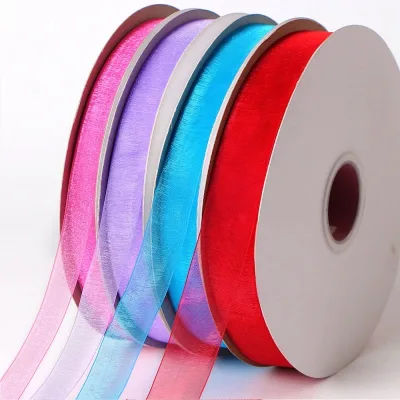
The "Double Face" and "Single Face" style variations mentioned in the data indicate that the ribbon may have different finishes on each side. Double-face ribbons are often preferred for high-end applications where the ribbon might be viewed from multiple angles, such as in gift wrapping or elaborate floral designs. The "Solid Color" pattern is the most common, offering versatility for various color schemes, though the data lists a wide array of colors including Light Purple, Black, White, Red, and Royal Blue. This variety allows buyers to match specific brand colors or seasonal themes.
For the hair accessory and DIY craft markets, the lightweight nature of the ribbon (with a single gross weight of 0.040 kg per package) is a critical factor. The "Woven" technic ensures durability, making the ribbon suitable for items that undergo frequent handling. The "All Ages" suitability suggests that the product is safe for general consumer use, provided it meets the necessary safety standards for toys and accessories. Buyers targeting these sectors should prioritize ribbons that are washable and clear, as these attributes enhance the longevity and aesthetic value of the final product.
Supplier Evaluation and Quality Control
Selecting the right supplier requires a rigorous evaluation process that goes beyond price comparison. The data indicates that suppliers are located in China, with specific mentions of Ningbo, Fujian, and Zhejiang. Buyers should verify the supplier's capacity to handle the required volume, as the lead time for delivery is listed as 5-10 days, which is relatively short but may vary based on order size and customization. The "7 days sample order lead time" suggests a responsive supply chain, but buyers must confirm if this applies to custom orders or standard stock items.
Quality control is paramount, especially when dealing with "recycled" claims. Buyers should implement a multi-stage QC process: pre-production, during production, and pre-shipment. The pre-production stage should involve verifying the raw material certificates and ensuring the wire gauge matches the specification. During production, random sampling can check for consistency in width, color, and the integrity of the wire embedding. Pre-shipment inspections should focus on packaging integrity, as the "Shrink Package" or "200 yards/roll" packaging must protect the ribbon from dust and damage during transit.
The "Customization" availability is a strong indicator of a supplier's flexibility, but it also introduces variability. Buyers must establish clear quality benchmarks for customized products, including color matching tolerances and wire flexibility standards. The "Single package size" of 22x18x2.2 cm provides a baseline for logistics planning, but buyers should confirm if this size changes for different widths or roll lengths. Additionally, the "Selling Units" being listed as "Single item" suggests that the supplier is willing to sell in small quantities, which is beneficial for testing but may impact the unit price.
Long-Term Procurement Considerations and Sustainability Strategy
Sourcing recycled polyester wired organza ribbon is not just a transactional activity but a strategic decision that impacts a company's sustainability goals. Long-term procurement requires building a relationship with suppliers who are committed to continuous improvement in their environmental practices. Buyers should prioritize suppliers who can provide transparent reporting on their recycling processes and who are willing to undergo third-party audits. The "Oeko-Tex Standard 100" and "SGS" certifications are good starting points, but they should be complemented by more specific recycled content certifications.
The "Delivery time" of 5-10 days is a competitive advantage, but buyers must consider the reliability of this timeline during peak seasons. Supply chain disruptions can affect lead times, so maintaining a buffer stock or diversifying the supplier base is advisable. The "MOQ" of 200 yards may be a constraint for smaller buyers, so negotiating flexible MOQ terms based on long-term volume commitments could be a viable strategy.
Furthermore, the "Eco-Friendly" and "Washable" attributes should be leveraged in marketing the final product. Buyers should ensure that the sustainability claims made by the supplier are consistent with the claims made to end consumers to avoid greenwashing allegations. The "Pattern" being "Solid Color" and the "Style" being "Double Face" or "Single Face" should be aligned with the brand's visual identity. Finally, the "Use" cases of "Decoration" and "packaging" suggest that the ribbon is a value-added component. Procurement teams should work closely with design and marketing departments to ensure that the ribbon selection enhances the overall product experience while meeting the necessary technical and ethical standards. By adhering to these guidelines, buyers can secure a reliable supply of high-quality, sustainable wired organza ribbon that meets both functional and strategic objectives.
FAQs
What certifications are available for this ribbon?
The product holds Oeko-Tex Standard 100 certification for safety. Additional standards like SGS are also available upon request. Buyers should verify specific test scopes to ensure compliance with their sustainability mandates.
How is the ribbon packaged for shipping?
Standard packaging is 200 yards per roll, often shrink-wrapped. Shipping methods include air, ship, or train transport. Custom packaging sizes are available if the buyer specifies requirements during the order process.
Can I get samples before placing a large order?
Yes, samples are available for free, but the buyer must pay freight charges. Sample orders typically have a lead time of seven days. This allows verification of quality before committing to larger Minimum Order Quantities.
What are the available width specifications for the ribbon?
Widths range from 1/8 inch up to 3 inches in various fractions. Metric options include 3 mm, 6 mm, and up to 50 mm. Specific widths like 1 inch or 1-1/2 inch are standard stock items.
Which locations are the manufacturers based in?
Products originate from Ningbo, Fujian, and Zhejiang in China. These regions are established hubs for textile manufacturing. Buyers should confirm the specific factory location to assess logistics and lead times accurately.
What is the typical delivery time for orders?
Standard delivery time is between five and ten days. This timeline applies to standard stock items without extensive customization. Custom orders may require additional time depending on the complexity of the request.
How does the material composition affect the ribbon quality?
The ribbon is made of 100% polyester, offering high tenacity and abrasion resistance. Some variants are woven satin or organza with double-face styling. This composition ensures durability for hair accessories and gift wrapping applications.